
March 28
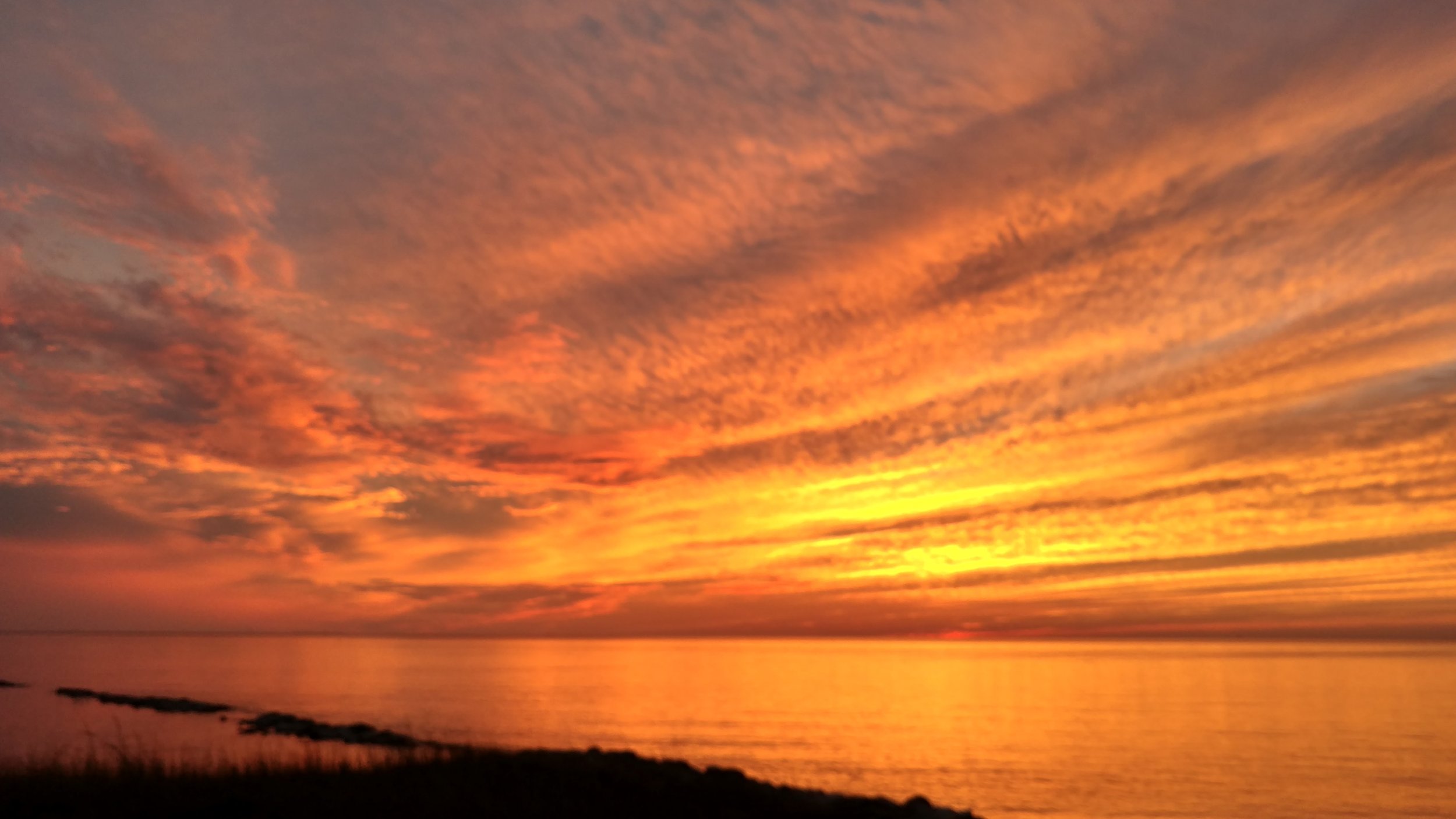
sky on fire, by Jim Zamata
March 26
taking care, by Abi Flowers
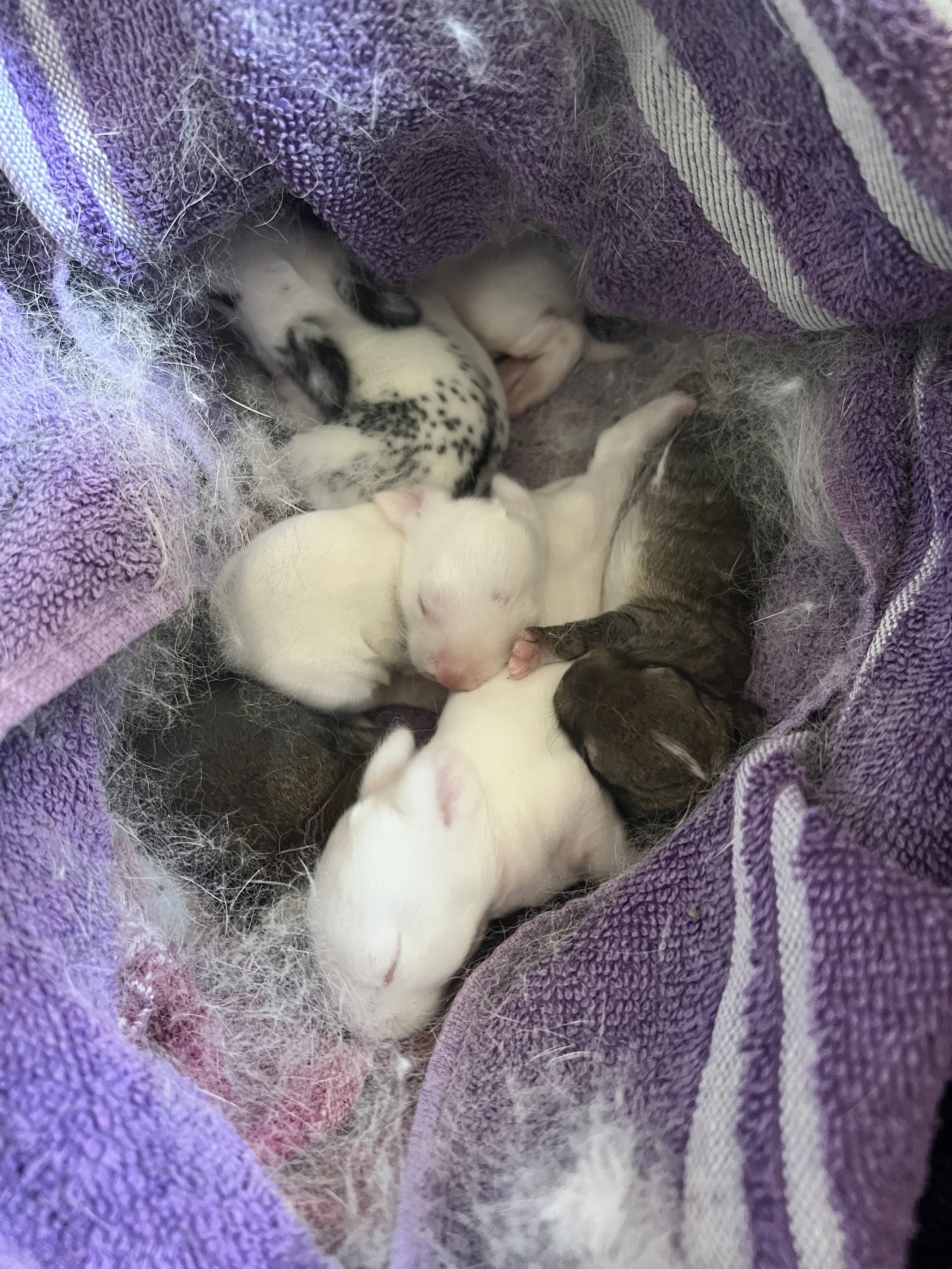
On a day at the beginning of March, I became the short-term caretaker of six teeny, tiny baby bunnies. It's quite the feeling to hold such a delicate creature while my own unborn child wiggles around inside (I have to assume baby gets quite the dopamine hit when I'm holding baby rabbits!). These little ones certainly represent a great beauty of the earth in my eyes--what a privilege and responsibility is our relationship to animals!
March 25
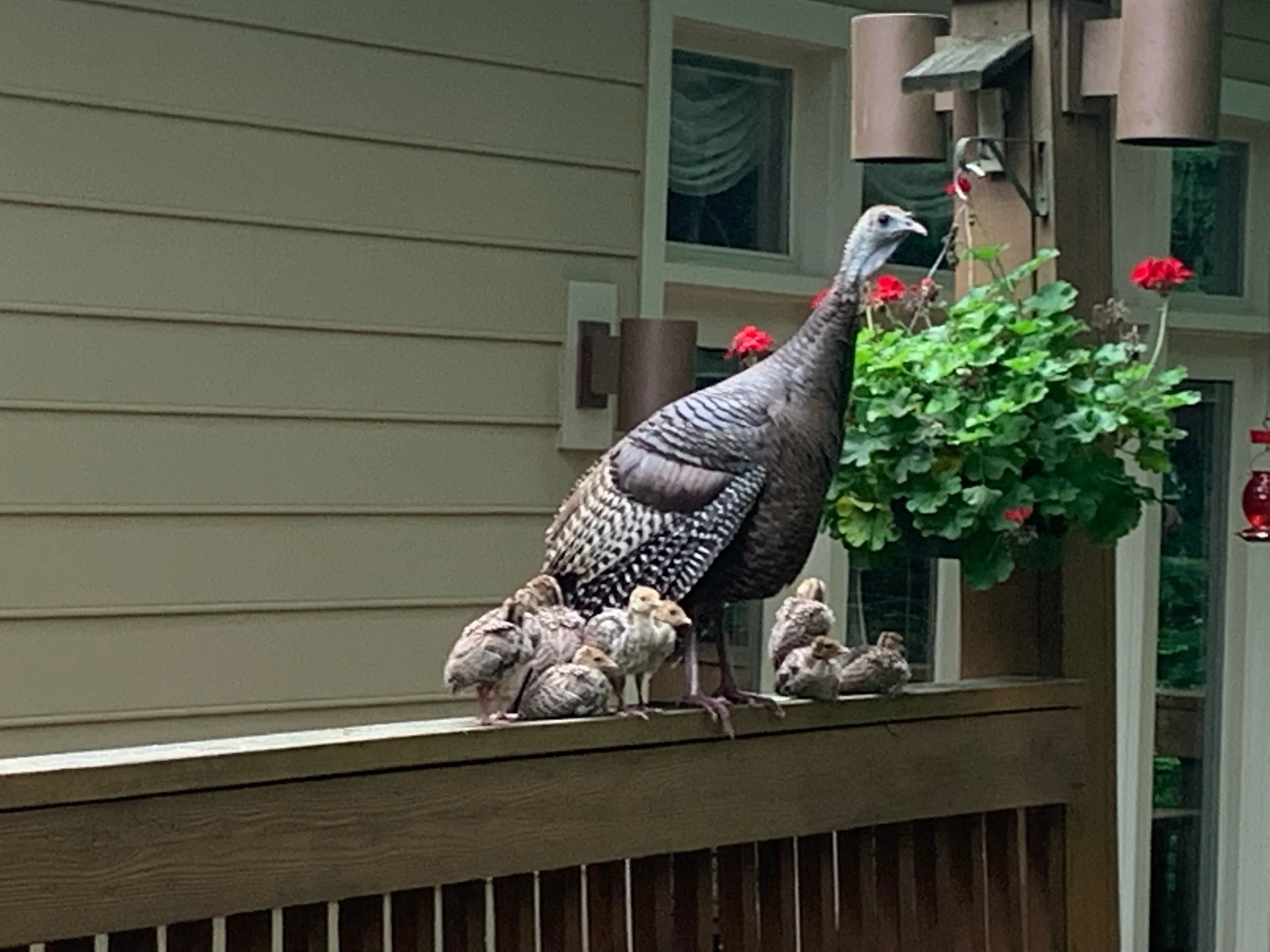
Turkeys on my deck, by Joyce Crowell
March 24
dear Matafele Peinam, by Kathy Jetñil-Kijiner
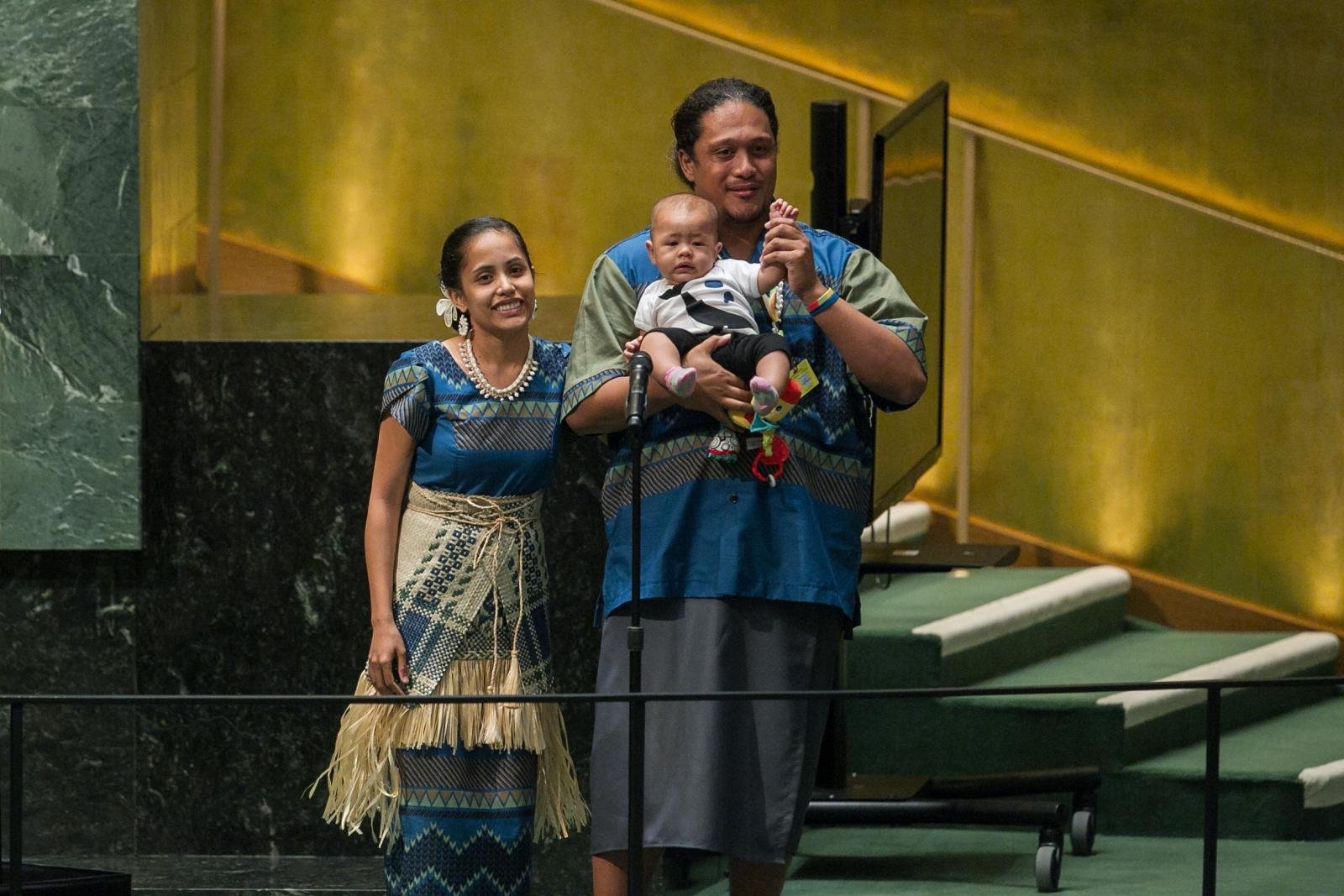
Kathy Jetñil-Kijiner became widely known as a ‘climate change poet’ after being selected to speak at the opening ceremony of the UN Climate Summit in New York in September 2014. She spoke passionately about the dangers of global warming for Pacific Islanders, and performed a poem addressed to her baby daughter, titled ‘Dear Matafele Peinem’. The poem describes the catastrophic consequences of global warming for the Marshall Islands and other low-lying Pacific islands, which will disappear below sea level if global temperatures rise by two degrees.
Dear Matafele Peinam
dear matafele peinam
you are a seven month old sunrise of gummy smiles
you are bald as an egg and bald as the buddha
your thighs that are thunder and shrieks that are lightning
so excited for bananas, hugs and
our morning walks past the lagoon
dear matafele peinam,
i want to tell you about that lagoon
that lucid, sleepy lagoon lounging against the sunrise
men say that one day
that lagoon will devour you
they say it will gnaw at the shoreline
chew at the roots of your breadfruit trees
gulp down rows of your seawalls
and crunch your island’s shattered bones
they say you, your daughter
and your granddaughter, too
will wander rootless
with only a passport to call home
dear matafele peinam,
don’t cry
mommy promises you
no one
will come and devour you
no greedy whale of a company sharking through political seas
no backwater bullying of businesses with broken morals
no blindfolded bureaucracies gonna push
this mother ocean over
the edge
no one’s drowning, baby
no one’s moving
no one’s losing
their homeland
no one’s gonna become
a climate change refugee
or should i say
no one else
to the carteret islanders of papua new guines
and to the taro islanders of the solomon islands
i take this moment
to apologize to you
we are drawing the line here
because baby we are going to fight
your mommy daddy
bubu jimma your country and president too
we will all fight
and even though there are those
hidden behind platinum titles
who like to pretend that we don’t exist
that the marshall islands
tuvalu
kiribati
maldives
and typhoon haiyan in the philippines
and floods of pakistan, algeria, colombia
and all the hurricanes, earthquakes, and tidalwaves
didn’t exist
still
there are those
who see us
hands reaching out
fists raising up
banners unfurling
megaphones booming
and we are
canoes blocking coal ships
we are
the radiance of solar villages
we are
the rich clean soil of the farmer’s past
we are
petitions blooming from teenage fingertips
we are
families biking, recycling, reusing
engineers dreaming, designing, building
artists painting, dancing, writing
and we are spreading the word
and there are thousands out on the street
marching with signs
hand in hand
chanting for change NOW
and they’re marching for you, baby
they’re marching for us
because we deserve to do more than just
survive
we deserve
to thrive
dear matafele peinam,
your eyes are heavy
with drowsy weight
so just close those eyes, baby
and sleep in peace
because we won’t let you down
you’ll see
The text of ‘Dear Matefele Peinem’ was taken from Kathy Jetñil Kijiner’s blog post, ‘United Nations Climate Summit Opening Ceremony — A Poem to My Daughter’, published 24 September 2014: https://www.kathyjetnilkijiner.com/united-nations-climate-summit-opening-ceremony-my-poem-to-my-daughter/.
March 23
quiet beauty, by Melissa Freeman
March 22
Golden light, by Jim Zamata

March 21
Music City Gold, by Metro Water
When you go, where does it go? Part II
March 19
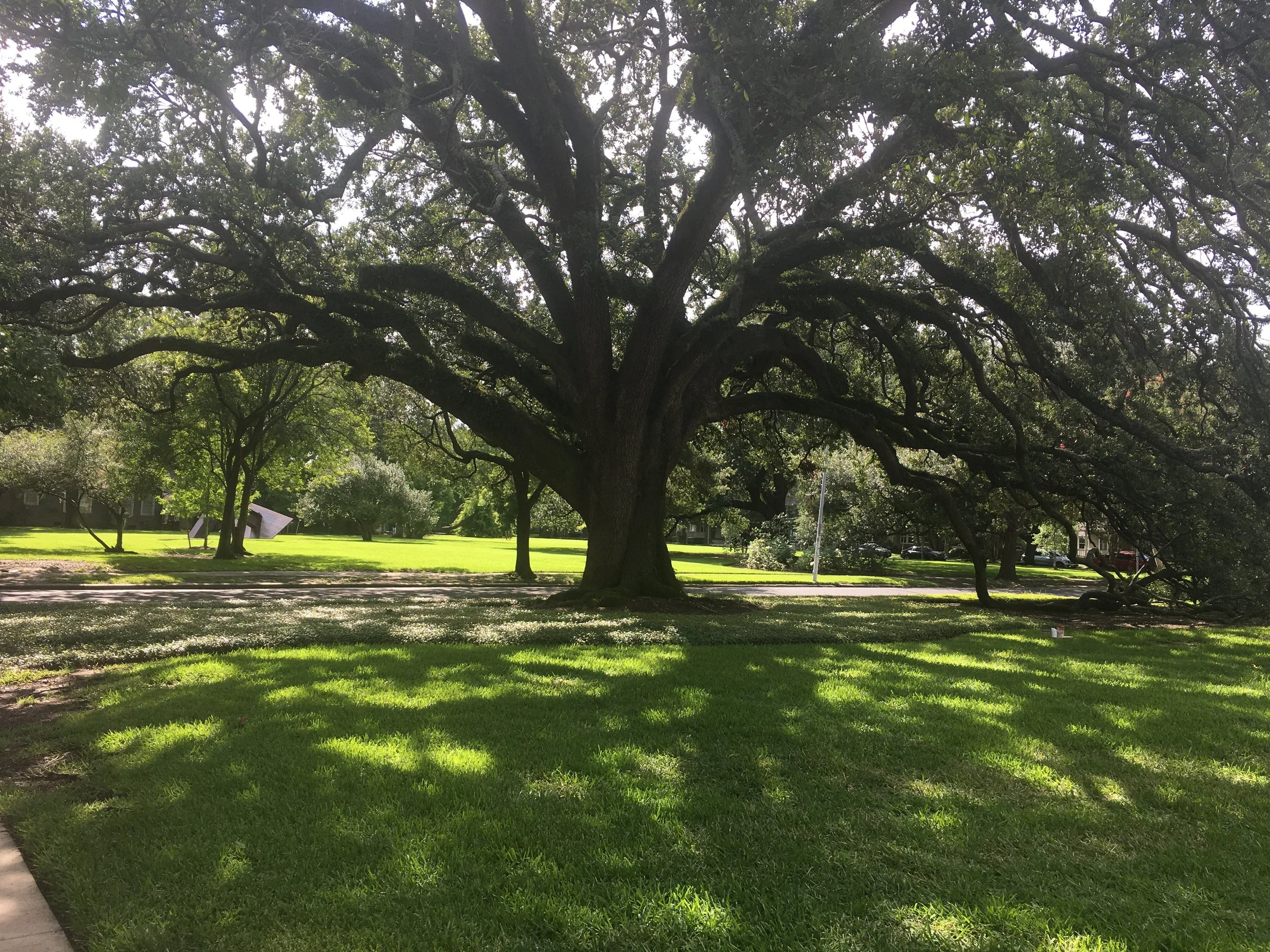
old tree, by Carol Doidge
March 18
When you go, where does it go?, by Metro Water

When dirty water reaches our treatment plants, we...
Reclaim grease and poop and we make it into fertilizer at our biosolids facility,
Treat the water with microorganisms to reduce pathogens (the resulting water is clear), and
Disinfect the water to return it to the river, safe for wildlife and recreation.
March 17
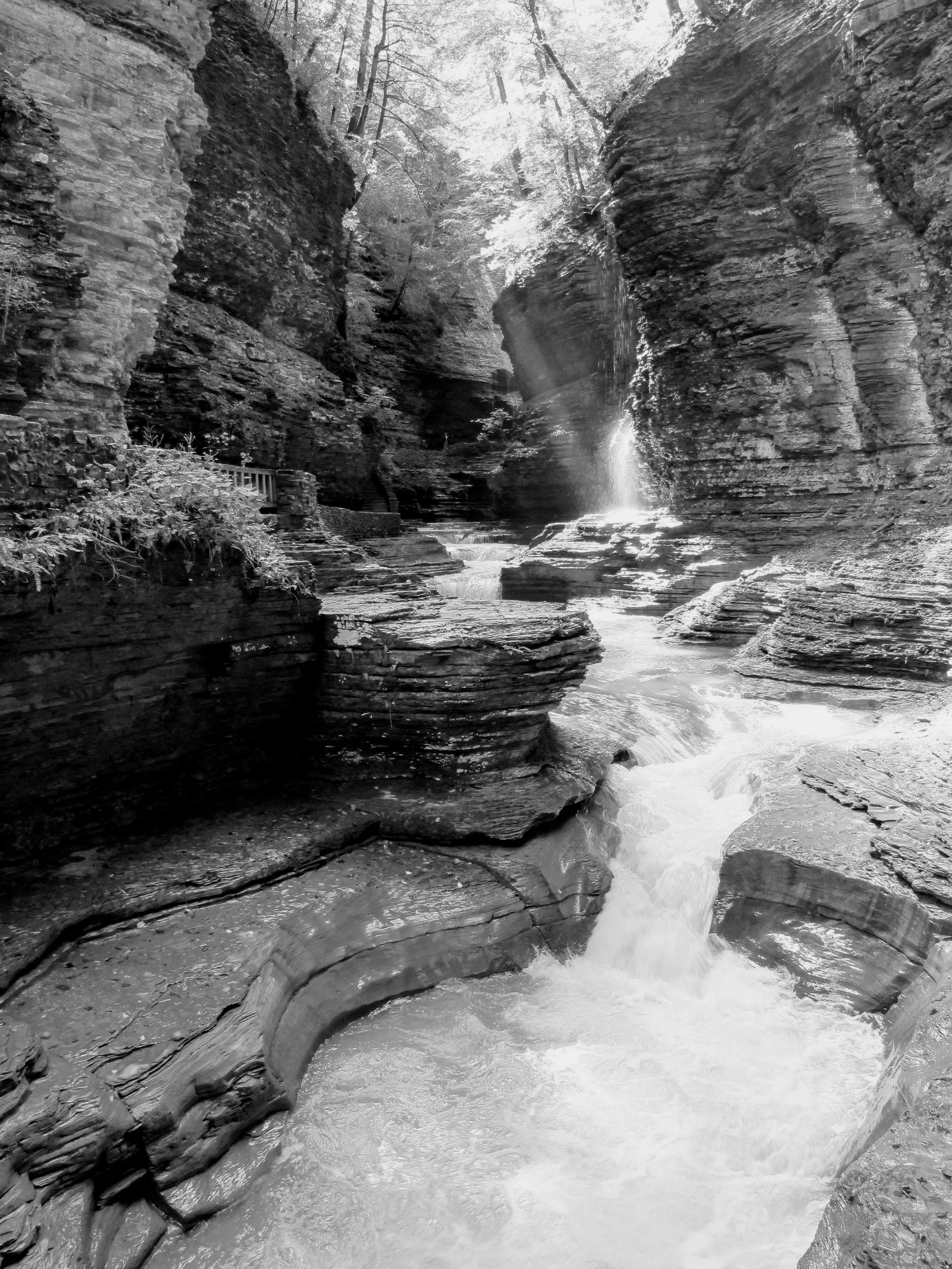
light and water play among the rocks, by Jim Zamata
March 16

March 15
other worldly, by Stephen Moseley
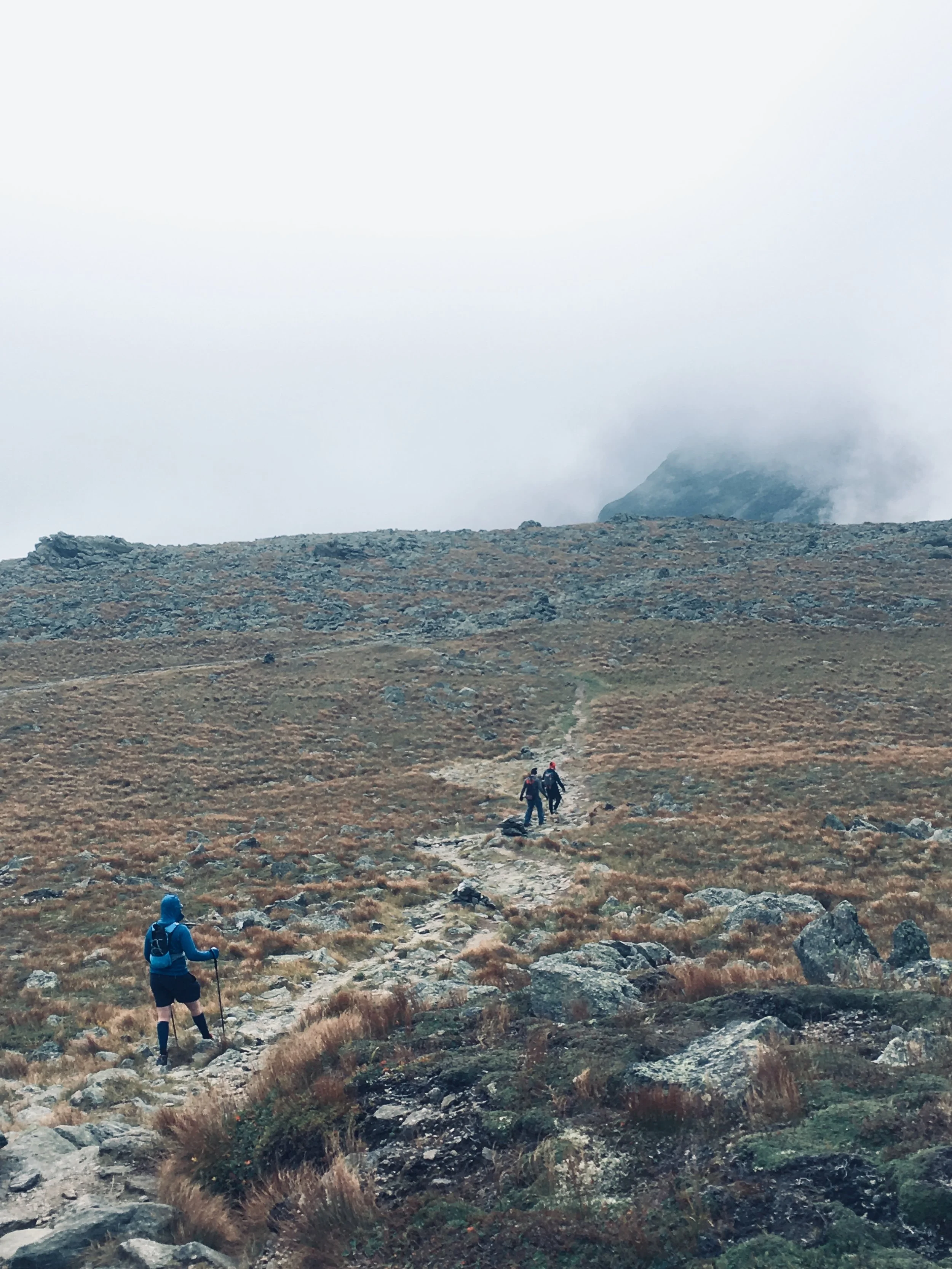
On a Saturday in September 2019, I spent about 14 hours summiting and descending Mt. Washington in New Hampshire.
In addition to experiencing all 4 seasons in one day as the elevation changed, we experienced intense wind, low visibility and beautiful views of God's creation.
The attached image was my view as my hiking companions walked ahead on what could have been a nearby planet. The terrain was like nothing I'd ever hiked on and the cloud cover only added to the mystery.
March 14
Shadows, by Ted Parks
I'm fascinated by how the camera's ability to capture light and shadow gives us different perspective on the passage of time. We are "strangers and pilgrims" on our way to a timeless land.
March 12
Anahorish, by Thomas Kleinert
I like this poem by Seamus Heaney very much, how it speaks of a certain place, both geographical and mythical, and I love what Lisa Hannigan and friends make of it with their voices.
My “place of clear water”,
the first hill in the world
where springs washed into
the shiny grass
and darkened cobbles
in the bed of the lane.
Anahorish, soft gradient
of consonant, vowel-meadow,
after-image of lamps
swung through the yards
on winter evenings.
With pails and barrows
those mound-dwellers
go waist-deep in mist
to break the light ice
at wells and dunghills.
March 11
Wrens, by Sara Tarpley
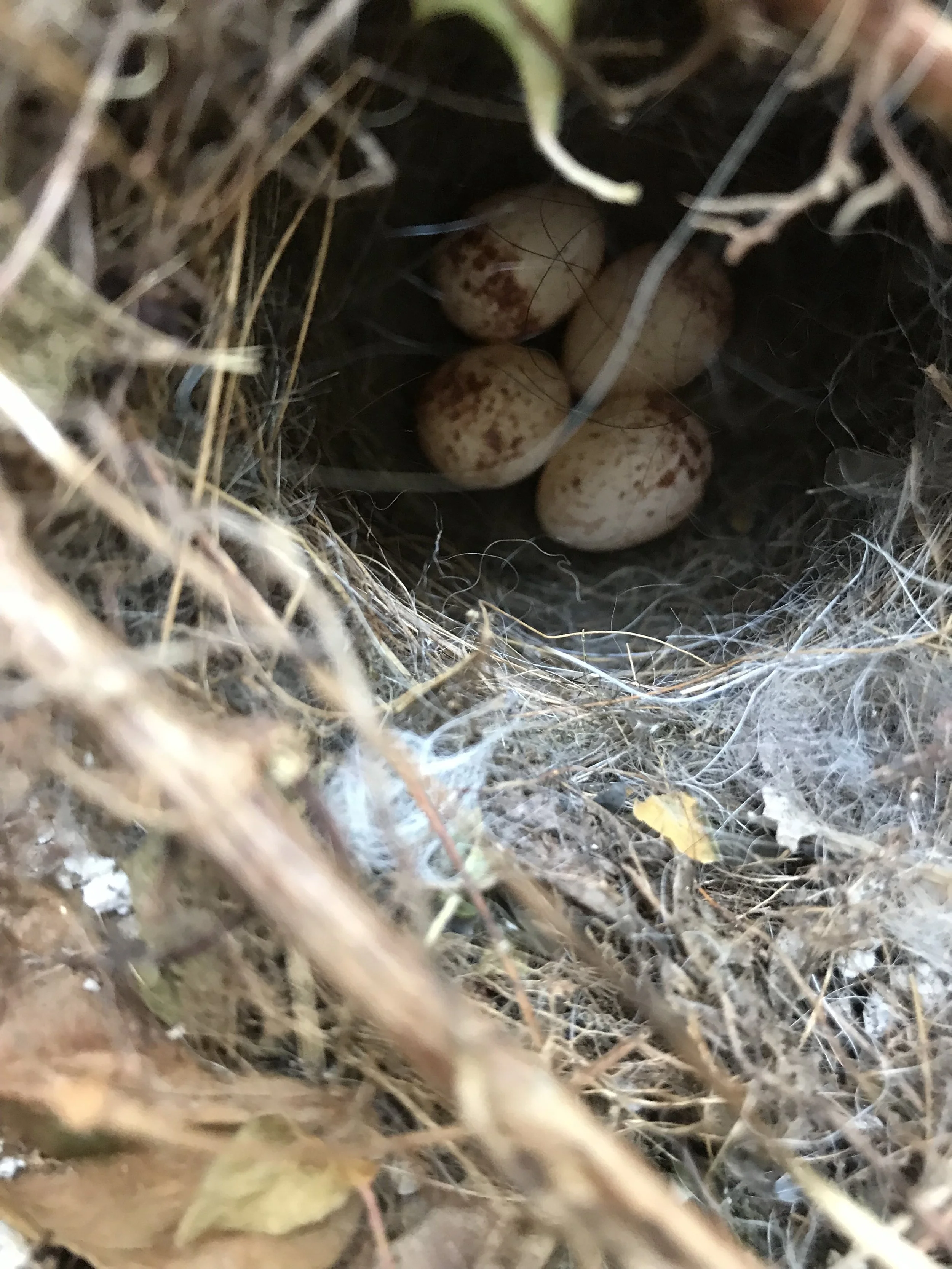
What's better than a plant in a hanging basket? A wren's nest in the basket. I was thrilled in 2019 that a mother wren decided to use my basket as a maternity ward. I watched with joy as tiny eggs hatched, grew, and finally the hatchlings spread their wings and flew (although one of them spent a fair amount of time clinging to our front wall in the process).

March 10
Giving and sharing, by Angie Washington

March 9
One very dark night, by Roger Young
My submission is about sharing the earth with each other.
My grandfather was a Disciples of Christ minister in Kentucky at the turn of the last century. He preached at both rural and urban churches. He had many experiences which his family and friends have cherished through the years.
The following incident occurred sometime between 1914 and 1918. He was conducting a series of meetings in a small rural church. The roads in the area were extremely poor and it was necessary for him to ride a horse to get to the church. His horse was a large and beautiful animal named Charlie.
One very dark night, when the church service was over and he had finished visiting with those who had attended, he mounted his horse and started home. There was a stretch of road that was very rough and rugged. When he reached that section, he dismounted and led his horse, being fearful that Charlie would stumble and fall. In due time he remounted and continued his journey safely home.
My grandfather had concern and compassion for all people, and he often visited the jails, homes for the elderly, orphanages and schools. A few days later he visited people in the local jail. He walked from cell to cell, visiting and having prayer with the men. When he came to the last cell, the man there said, “I know you. You are H. C. Bell, the preacher who was holding a meeting in our village a few days ago”. My grandfather replied, “Yes, that is right”. The man in the cell continued, “Do you remember leading your horse part of the way home one night after church?” My grandfather answered, “Yes, the road was very rough there”. Then the man said, “I was following you and I meant to rob you but when I saw the other man walking beside you, I decided not to do it”. My grandfather said, “I surely am glad that you decide not to do that” and with a smile he walked out of the jail to his home.
We have always believed that the Holy Spirit walked with our grandfather that very dark night and protected him. Our grandfather believed that as well.
God is with us and protects us even when we are not aware of God’s presence.
March 8
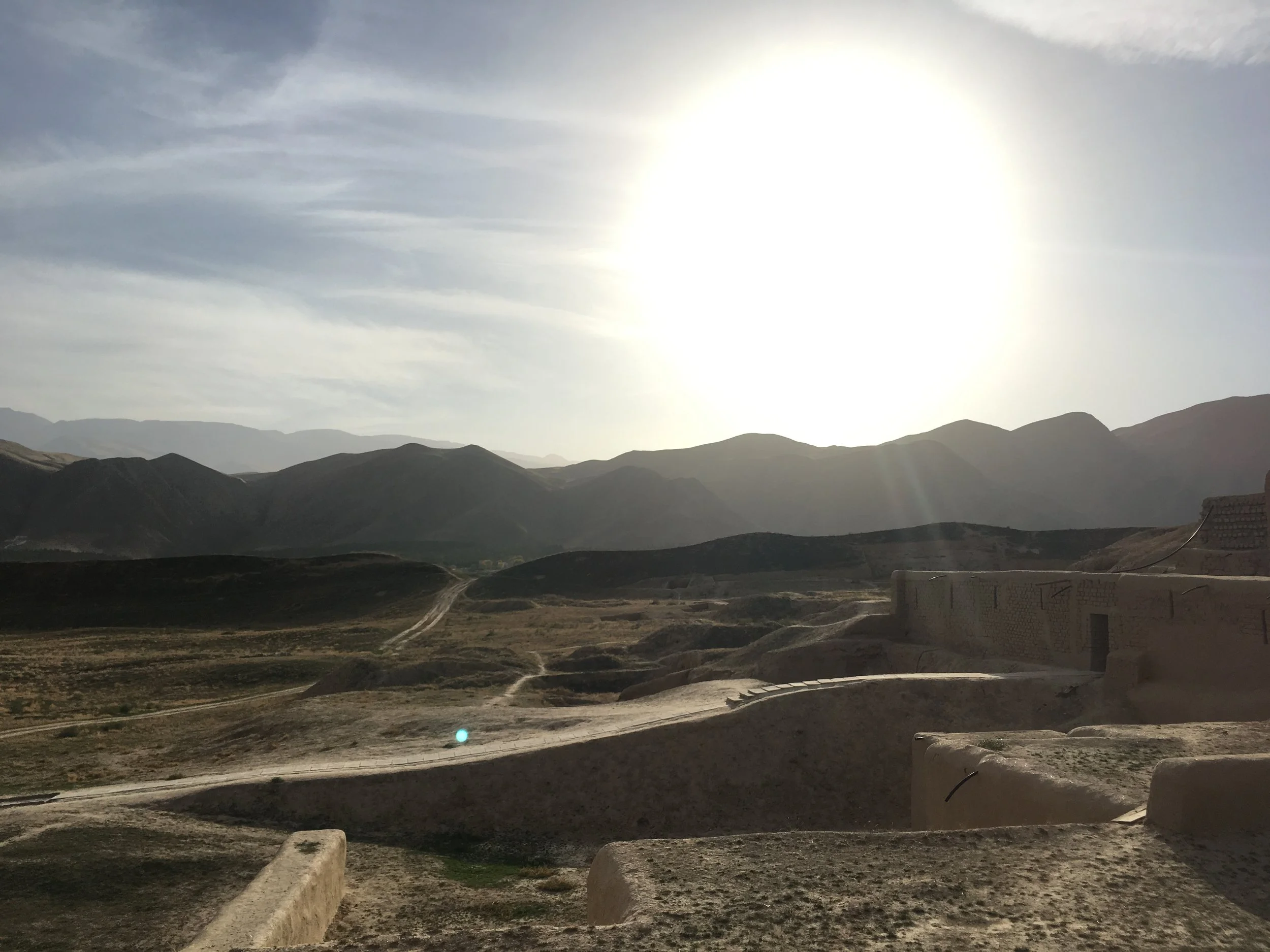
Fortress of Old Nisa, by Quentin Flowers
This is the Fortress of Old Nisa, a protected UNESCO World Heritage site, near Ashgabat, Turkmenistan. Remains on this site date as far back as 250 BC.