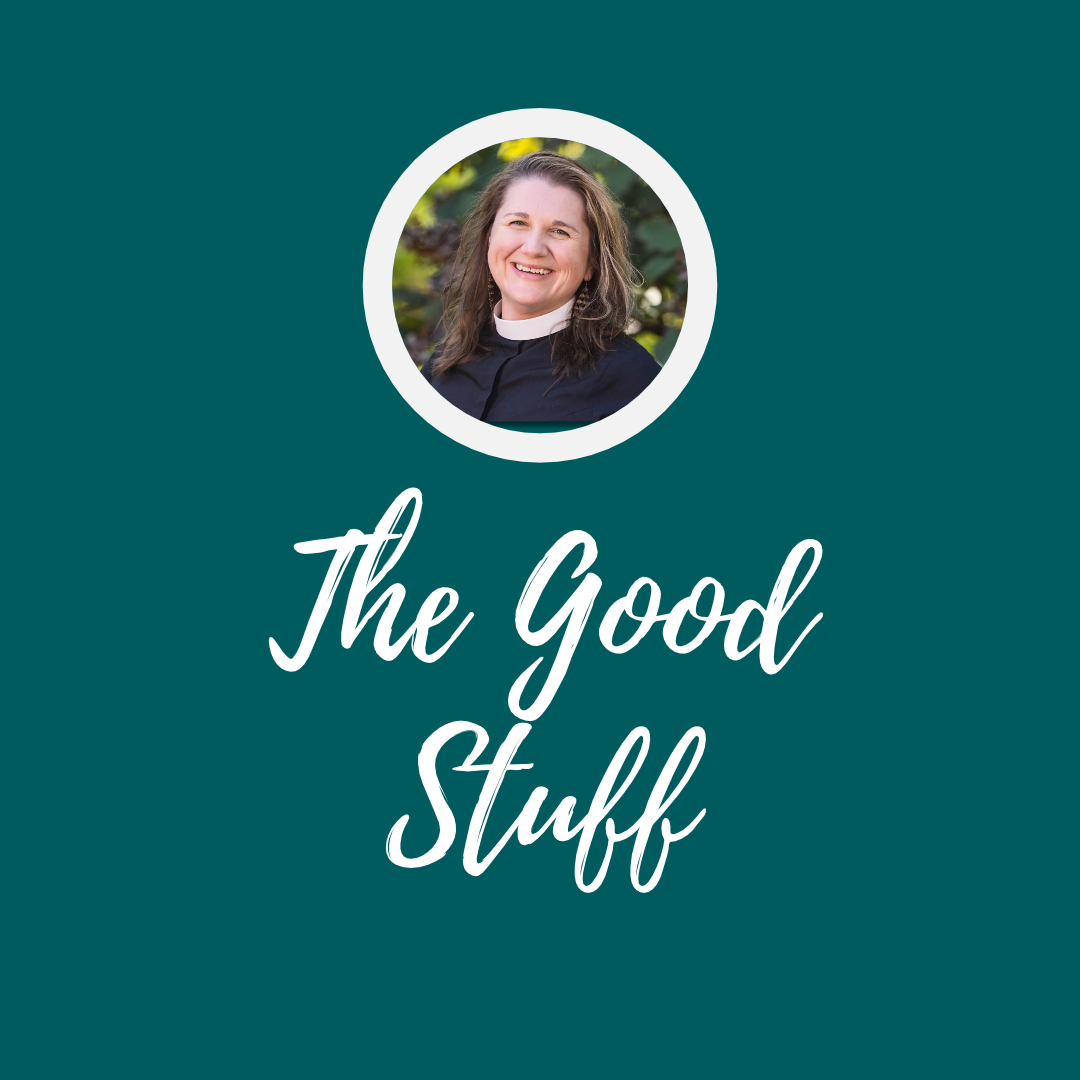
Sermon preached by Rev. Kate Fields on Sunday, October 11, 2026
Well, good morning, y'all. It's so good to be here, Vine Street. I love Vine Street. I'm so honored to get to bring the word this morning. Thank you to Reverend Margie. Thank you, Reverend Wesley, for the invitation to be here. I bring greetings on behalf of St. Augustine's Chapel and the Reverend Becca Stevens and Yuri Rodriguez and all of our congregation. We are grateful for the work that y'all are doing here in Nashville. Thank you for the work you do with Insight Counseling Centers and on National Coming Out Day. Thank you for the work that y'all do for the LGBTQIA community. It is liberatory, and we are grateful, from our congregation to yours.
The first time I came to Vine Street (I'm from Nashville, so I know about Vine Street), I first came in the sanctuary, which I think was a different sanctuary, or I don't know, y'all renovated since, but it was 2012. It was the presidential election, and y'all hosted an Election Day communion here at Vine Street, and it was the first time I had experienced this great church. And since then, I have been back for different things along the way.
And it's so good to be here today in a Hebrew Bible text that I haven't been in in many years. I was glad to revisit this text in the Exodus saga, the story of the golden calf. I bet many of us remember this from Sunday school growing up. When Moses goes away for many days, and given that Moses is this direct link to God for the people, they feel abandoned and afraid, and frankly they panic because he's not there. And so they do what they've always known, and they worship an old god that they knew from Egypt, and they say, "Aaron, come make gods for us. Who shall go before us?" That is the request of a people who are scared. They needed some control of the situation. They needed to know that someone was going before them. And so out of their fear, they made an idol.
They couldn't see the freedom that was already theirs, and they couldn't see what was to come. And so God became angry. We know this. And God told Moses what was going on and sent Moses straight back to the people to say it was Yahweh who delivered y'all from enslavement, right? Not these gods that the calf represents. Don't forget who it was that brought you freedom. So Moses pleads with God, and God changes God's mind. And what a story, what a lesson that transcends years and is still a good word for us this morning in October of 2026.
We may not have golden calves in our home foyers, right? But we know what idols are. Idols can be anything that we put our hearts into, our attention, our love, and before we know it, it soaks up our passion and our heart and our time and our energy. They can be in the shape of a person who we've given our hearts and attention and our love to, but before we know it, we're hyperfocused on that person, and we can't remember who we are anymore. An idol can be a pursuit of wealth. It can be an addiction. It can be a fear that keeps us small. Idols are often things that we're familiar with and things that we can control, because the unknown is just so scary. Sometimes an idol can be how you always have to be right and you just cannot listen to someone else's way. Or an idol can be this deep anger and vengeance for someone who has wronged you, and it truly possesses you. It becomes the vortex that all of your energy goes to.
And we can have societal idols. We know that y'all preach. I know that y'all preach about it often. Collective idols that hold things like whiteness supreme. Idols can be anything that we make them, right? And some of them are not, like, ontologically, they're not bad in and of themselves, but it's what we do with them. And I'm not... there's really no judgment. I've had idols. I know that you have had idols. The thing is, though, they keep us hollow. I was thinking about it this week. They really make us shadows of ourselves, right? They keep us from our best selves.
And there's a great Southern word for this. The word is cattywampus. Has anyone heard this word? Oh, good. Okay. I thought they're gonna think I am just from the other side of town or something and have created a word. But no, it's a real word. It's a word that means mixed up. Like when you are about to go get your Christmas lights that you threw in a box last year because you were trying to get your decorations down before February, and you didn't tie them up correctly, and they are a jumbled mess, and it will take you 30 minutes to get them unraveled. They are cattywampus. That is a giant, directionless mess. And I think that's what idols do, right? They tangle us up. They mix us up. And we don't know who we are anymore.
It's like we're malnourished, eating junk food when what we really need is actual nutrients. It's like those... I do a lot of work in the food system, so I think about food all the time, but you know those tomatoes that look like a tomato that you get at, like, a supermarket, and you cut into them and try to eat them, and it's just like water? And it looks like one, but it does not taste like one. And it's like, it's not the good stuff. It's not the tomato from over here, from the farm, grown in Tennessee soil, that is an heirloom seed. And when you cut it, you smell it. Your hands smell like it. You put it on with Duke's mayonnaise and you eat a sandwich, and that is a tomato. That's the good stuff. That's the difference in idols and love.
And I think that's the rub. It's what I want to say most today. It's the heart of this Exodus story. It's that idols take us away from the life that we could have. It takes us what? Away from what could be for each and every one of our lives. The golden calf took people away from who had actually liberated them and who could become the one to set them free.
I think about this in the Isaiah text that we read today, which gives a vision of God's people when they would come out of exile in Babylon. The text is this: "On this mountain, the Lord of Hosts will make for all peoples a feast of rich food, a feast of well-aged wine, a feast of food filled with marrow, of well-aged wine strained clear." This is the good stuff. God is the good stuff. The food that nourishes us. It reminds me of this great Ani DiFranco song lyric, which is, "You are really good food, and I am full."
And that's what I want to say: that there's an abundance of really good stuff for each of us today if we will just let that idol go. If we stop holding on to what is no longer ours to hold, the idol will stop possessing us. And slowly we'll remember who we are. We'll remember that the very best thing that we can experience in this life is love. And love doesn't possess. It never possesses. It always creates space. Beloved, love creates space always.
Love is the most powerful force for change in the world. It heals and it liberates, and it asks us to be our best selves and to give ourselves to the work of the healing of the world. And this is hard, and it's scary, and a lot of times it requires faith and not control. And so it's easier to stay with what we know, right? With that thing that we know. But that isn't love. Love does not possess. It creates space.
And we can't do the work of the healing of the world if our hearts are clouded by an idol, a false love, a shadow. We miss out on the best stuff, this abundant life that Jesus talks about. The cost of what we miss out on when we worship idols is enormous. And I think that's what I want to say. It isn't about the judgment of the thing. Like, we all have had idols. We're just all the same. Like, we're all in the same boat. It's all... but it's what you miss out on when that thing takes up your heart.
You are really good food, and I am full. Oh, that we would taste and see that the Lord is good, right? What a good psalm. Many of y'all may know of the work of Thistle Farms, or maybe you've been to the Thistle Stop Café on Charlotte Pike, or you've bought some oil. I'm wearing it today, from Thistle. But if not, I'd love to tell you a little bit about Thistle Farms for just a minute, because this text today really made me think of the story of Thistle Farms. Reverend Becca Stevens, who is our lead priest at St. Augustine's, along with St. Augustine's, started Thistle Farms 30 years [ago making] soap in St. A's kitchen, making a huge mess in our kitchen in the chapel. It started off in what was called Magdalene and now has expanded to the largest national network of long-term, free residential beds and sister organizations in the United States for women. It has expanded now, even now.
And most of the women this serves first experienced abuse when they were children, and then they began using alcohol and drugs by age 13 and hit the streets between 14 and 16. These traumatic childhood experiences gave way to homelessness, addiction, abuse, incarceration, and further poverty. The stories of the women of Thistle are just something else, if you ever get to hear any of them.
And at Thistle, we believe that love is more powerful a force than any of the things that drive women to the streets, and that a strong community will help them heal, and not just heal, but thrive. And reading our text this morning, I think about how many women were on the street because of society's idols that put them there, out on the street. Idols we pay a big price for, and these women certainly have. And how it took love, and not the idol of racism or judgment about addiction or criminal records, for these women to be empowered to become the heroes of their own stories and change their lives. This idol stuff, y'all, is death-dealing. It exists in the shadows, and it destroys us, and the price that we pay for it is enormous.
But what we can create together if we don't worship shadows is love. We can create a love economy, which supports human dignity, healing, and community. So that's the work I invite us into today, the work that is for the life of the world. There's this great text in John 6 where it says that Jesus came to be the bread of life and was given for the life of the world.
So let go of what isn't yours to hold anymore. It's not yours. Let it go. Let it go for yourself, so you can be your best self, so you can remember who you are, so you can be free. And let it go for others too, y'all. Let it go and choose a love that creates space for everyone to be their best selves. A love that does not see a 13-year-old on the street and let her stay there. It's time. This is our work. "What are you doing with this one wild and precious life?" Mary Oliver asks. St. Mary Oliver.
As I close, I'm reminded of this other text in Isaiah, just a little bit later in chapter 55, that says, "Why do you spend your money on that which is not bread, and your earnings for that which does not satisfy? Listen carefully to me, and eat what is good, and delight yourselves in rich food." Delight yourselves in the good stuff. We follow the bread of life. The God of the brokenhearted. The God of the disinherited. The God of the forgotten, the alone, the oppressed, the God of women on the street, the God of the hungry, the one who can and will give you a wild and precious life full of love and meaning and the good stuff, not shadows and idols.
So when you come to the communion table today, which I love, that it's the center of your gathering, bring your hunger for the good stuff and eat the bread of life. The bread of life, not death. The bread of life. That we would all become what we receive and eat today. That we would be free. Amen. And may it be so.